




Search engine optimization has evolved beyond keywords, backlinks, and technical factors. By offering a compelling user experience and incorporating SEO with modern animation effects, you can encourage visitors to spend more time on your website and interact with its content. This article examines the relationship between SEO and UX, and how animation can improve your designs and elevate the user experience.
What are UX and UI?
Google prioritizes user interests and high-quality experiences, making UI/UX design crucial for website optimization. While both UX and UI aim to improve user interaction, they serve different functions. UX plans the steps and interactions needed to achieve goals, while UI designs the visual representation of those steps.
User Experience (UX): UX concentrates on how users interact with a website, prioritizing clarity and convenience. Technically, it includes elements like site speed, navigation, interface design, menu functionality, content, and page interaction. Effective communication and seamless user access to desired information are also essential.
User Interface (UI): UI refers to the visual aspects of an interface, including buttons, text, images, fields, and animations. It encompasses everything a user interacts with visually.
A successful website requires both effective UI and UX. Poor navigation (subpar UX) can undermine even the most attractive design (good UI), while an unappealing design (poor UI) can negate a user-friendly experience (good UI).
The Importance of UI/UX for SEO
Optimizing both UX and UI is essential for SEO and effective website conversion. High-quality UX/UI can:
- Increase visitor time on the site, signaling to search engines that the content is valuable, potentially improving rankings.
- Improve returning user rates, leading to higher conversions and sales.
- Reduce development time and costs significantly.
- Strengthen digital branding, increasing business credibility and customer loyalty.
For example, Virgin America redesigned its site using UX principles, resulting in a 14% increase in conversion rates, a 20% decrease in customer service calls, and faster ticket bookings.
Cart Abandonment:
Research from the Baymard Institute identifies the main reasons for cart abandonment, such as high extra costs, required account creation, slow delivery, and complex checkout processes. Improving UX can address many of these issues, potentially increasing conversion rates by 35%
UX and Search Rankings
UX significantly impacts SEO and search rankings. Search engines prioritize websites that offer superior user experiences. Poor UX can result in users quickly leaving a site, negatively affecting search rankings, while positive user engagement can improve them.
To elevate UX and improve search rankings, implement best practices like responsive web design, image compression, caching, file minification, breadcrumbs, and social share buttons.
Introducing SXO
SXO (Search Experience Optimization) combines UX and SEO principles. Its goal is to create websites that appeal to both search engines and users. SXO focuses on providing a seamless user journey from search query to website interaction, improving conversions, and driving revenue growth through organic traffic.
SXO Strategies:
- Understand Search Intent: Conduct thorough keyword research and analyze user behavior.
- Create High-Quality Content: Produce informative and engaging content.
- Master Technical Optimization: Improve website performance and ensure proper indexing.
- Refine UX/UI: Design a well-structured website with intuitive navigation and user-friendly features.
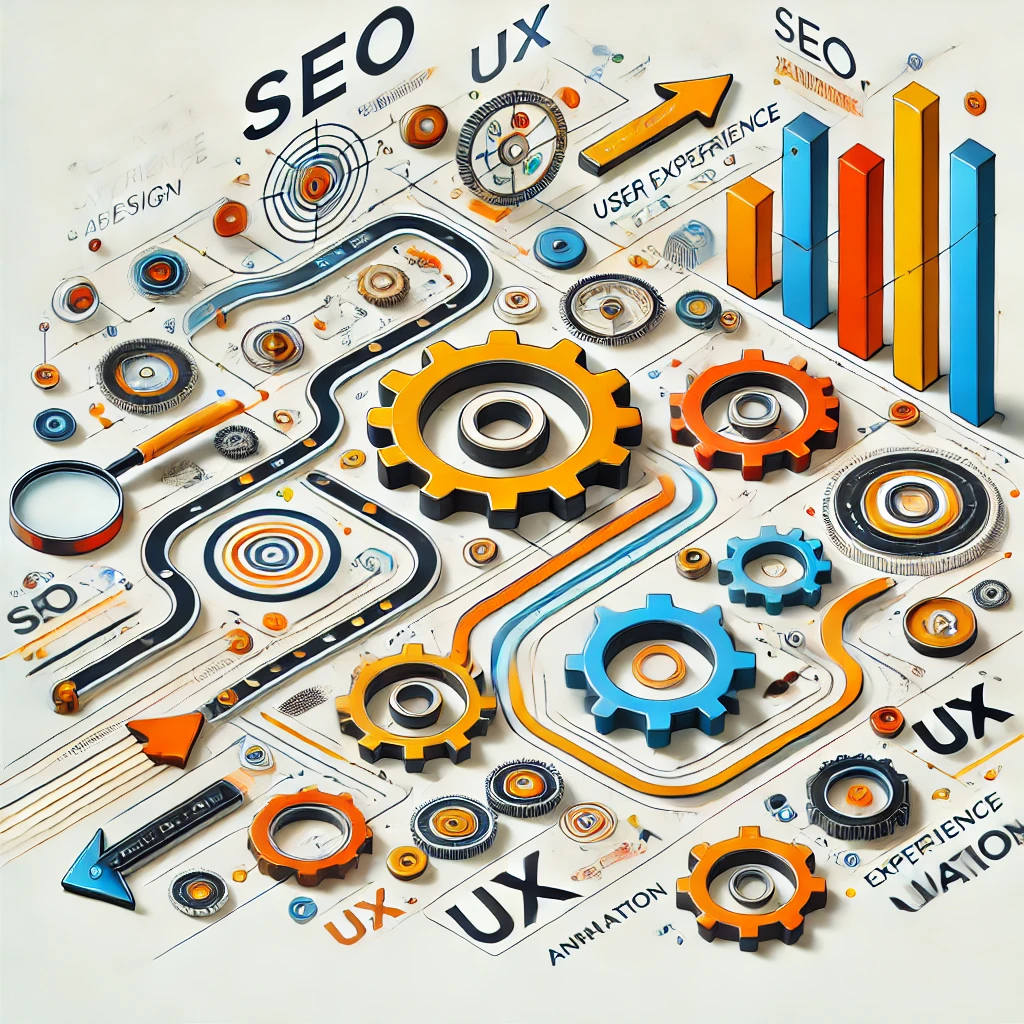
UX SEO Guide: Factors Affecting Rankings
Site Architecture and Navigation:
Good site architecture ensures search engines can easily crawl your site and helps users find information quickly. Keep click depth minimal and structure pages into clear categories.
Layout and Design:
A well-designed layout aids in user comprehension and action, benefiting both SEO and user experience. Use headings correctly and incorporate graphic elements aligned with your brand.
Page Speed and Core Web Vitals:
Fast page load times and high Core Web Vitals scores are crucial. Google prioritizes sites that load quickly and offer a stable visual experience.
Conversion Optimization:
UX design directly influences conversion rates. Address UX issues like non-responsive design and difficult navigation to improve conversions.
The Power of Animation in UX Design
Animation improves user experience by creating interactive and engaging interfaces. It can simplify complex concepts, provide visual feedback, and guide users through their journey. Effective animation should be simple, well-timed, and optimized for performance across all devices. With animation, you can place visual cues that draw the user’s attention toward crucial points in your content and create a dynamic look for an otherwise static experience. It helps users focus on important information and stay engaged through enjoyable animations.
Implementing Animated Features in E-commerce
For e-commerce platforms like Shopify, several apps offer animated features that can significantly improve user experience and engagement. Let’s explore some of these tools:
- Mega Animated Cursor Effects: This app transforms the standard cursor into an engaging visual element. By adding playful animations to the cursor, it creates a unique and memorable browsing experience that can differentiate your brand and encourage exploration of your site.
- Mega Animated Announcement Bar: This tool adds a dynamic touch to your site’s header. It can display important messages, promotions, or updates with eye-catching animations, ensuring that crucial information catches the visitor’s attention without being intrusive.
- Mega Promotions Side Bar: This feature introduces a sliding sidebar that can showcase special offers, new products, or important announcements. The sliding animation grabs attention effectively while allowing users to easily dismiss the sidebar if they choose.
- Mega Text Animations: By animating key text elements on your site, this app can highlight important information, product features, or calls to action. The subtle movement can guide the user’s eye to critical content, improving engagement and potentially increasing conversions.
- Mega Confetti Effects: This playful feature adds a burst of excitement to your site. It can be triggered by specific actions like completing a purchase or clicking a button, creating a celebratory atmosphere that enhances positive user experiences.
By strategically incorporating these animated elements, you can create a more engaging, memorable, and effective e-commerce site. The key is to find the right balance between visual appeal and functionality, always keeping the user’s needs and preferences at the forefront of your design decisions.
Related Post
Profitable Dropshipping Niches in 2024
The foundation of any thriving dropshipping business starts with a well-chosen niche. Picking

Transform User Experience with this Mega Scroll To Top Magic guide
Adding a scroll-to-top button is a simple yet effective way to enhance your
Stimulating Profitable Sales Off-Season in 2024
Do not wait for special occasions. Stimulate sales in your Shopify store with

Shout about Free Delivery Promotions with Mega Free Shipping Bar
In the dynamic world of e-commerce, staying ahead requires innovative strategies to attract